
Wednesday, October 27, 2010

Tuesday, October 26, 2010
ENSO-lated
What does ENSO mean to you? It sounds like it might be one of those acronyms beloved by the Pentagon or Homeland Security, doesn't it? It could stand for something like Enhanced National Security Options.
In fact though, ENSO stands for El Nino (La Nina) Southern Oscillation and it refers to a climate pattern that occurs across the tropical Pacific Ocean on a regular basis. It comes around on average every five years.
The variation that occurs in the surface temperature of the tropical eastern Pacific is known either as "El Nino" (warming) or "La Nina" (cooling). At the same time, the air surface pressure in the tropical western Pacific is known as the "Southern Oscillation." The two phenomena together create ENSO, and we need to understand ENSO because its effect on our weather is enormous, and as gardeners, we flourish or perish with the weather.
ENSO's effects are complicated and it affects weather right around the world, but let's try to at least understand what it does to us here in the southern part of North America.
During an El Nino period, winters in northeast Mexico and the southeast United States are cooler and wetter than average. It will not surprise you to learn that we were under the influence of El Nino last winter.
El Nino also tends to surpress hurricane activity which probably contributed to the fact that the 2009 hurricane season was the least active in twelve years. That El Nino period lasted through May 2010. Then La Nina took over.
For us, La Nina has mostly the opposite effect of El Nino. In North America, this means that the North Midwest, the Northern Rockies, Northern California, and the Pacific Northwest's southern and eastern regions all have above-average precipitation during La Nina, while right across the southern part of the continent - and that means us - below-average precipitation prevails. Also, in the southern part of the continent, warmer winters usually occur during La Nina.
Looking at the National Weather Service's Climate Prediction Center website today, I learned that the projection for November, December and January calls for above-average temperatures for our region and a continuation of below-median precipitation. If this is correct, we cannot look for an early end to our drought.
In fact, the NWS predicts that the La Nina period, with its dry conditions for the southern part of the country, will continue to hold sway until at least May of next year. Projecting beyond May is less reliable, they admit, but they believe that La Nina may be ending in the spring.
In my yard, we have experienced very little rain since July and the NWS certainly does not offer me any hope of real relief anytime soon. It looks like I might as well get used to moving sprinklers and hauling hoses around for the foreseeable future.
At the same time, if their predictions are correct, I might not be losing any plants to cold weather this winter, if only I can keep from losing them to dessication.
On the other hand, I've been seeing lots of woolly-bears lately and I have to tell you, they are all dark. Just like they were last fall when they predicted a cold winter for us. Who will be right this year - the scientists or the caterpillars?
In fact though, ENSO stands for El Nino (La Nina) Southern Oscillation and it refers to a climate pattern that occurs across the tropical Pacific Ocean on a regular basis. It comes around on average every five years.
The variation that occurs in the surface temperature of the tropical eastern Pacific is known either as "El Nino" (warming) or "La Nina" (cooling). At the same time, the air surface pressure in the tropical western Pacific is known as the "Southern Oscillation." The two phenomena together create ENSO, and we need to understand ENSO because its effect on our weather is enormous, and as gardeners, we flourish or perish with the weather.
ENSO's effects are complicated and it affects weather right around the world, but let's try to at least understand what it does to us here in the southern part of North America.
During an El Nino period, winters in northeast Mexico and the southeast United States are cooler and wetter than average. It will not surprise you to learn that we were under the influence of El Nino last winter.
El Nino also tends to surpress hurricane activity which probably contributed to the fact that the 2009 hurricane season was the least active in twelve years. That El Nino period lasted through May 2010. Then La Nina took over.
For us, La Nina has mostly the opposite effect of El Nino. In North America, this means that the North Midwest, the Northern Rockies, Northern California, and the Pacific Northwest's southern and eastern regions all have above-average precipitation during La Nina, while right across the southern part of the continent - and that means us - below-average precipitation prevails. Also, in the southern part of the continent, warmer winters usually occur during La Nina.
Looking at the National Weather Service's Climate Prediction Center website today, I learned that the projection for November, December and January calls for above-average temperatures for our region and a continuation of below-median precipitation. If this is correct, we cannot look for an early end to our drought.
In fact, the NWS predicts that the La Nina period, with its dry conditions for the southern part of the country, will continue to hold sway until at least May of next year. Projecting beyond May is less reliable, they admit, but they believe that La Nina may be ending in the spring.
In my yard, we have experienced very little rain since July and the NWS certainly does not offer me any hope of real relief anytime soon. It looks like I might as well get used to moving sprinklers and hauling hoses around for the foreseeable future.
At the same time, if their predictions are correct, I might not be losing any plants to cold weather this winter, if only I can keep from losing them to dessication.
On the other hand, I've been seeing lots of woolly-bears lately and I have to tell you, they are all dark. Just like they were last fall when they predicted a cold winter for us. Who will be right this year - the scientists or the caterpillars?
Friday, October 22, 2010
A gardener's week - #12
I confess I am not just a lazy gardener but a lazy photographer, too. When I go into my garden to take pictures of flowers or foliage, I most often just use whatever lens happens to be on the camera at the time. That is usually one of the zoom lenses that I use for trying to capture butterfly or bird images, not really the optimum choice for flower photography.
This week, though, I decided to exert myself a bit and go macro. I put the macro lens on the camera and went out to take a really close-up look at what was going on in my garden. The pictures that I've posted here the last couple of days were part of the result of that effort. Here are some more up close and personal images from my garden this week.

Yellow cestrum.

Tradescantia pallida 'Purple Heart'.

Rosa 'Red Cascade'.

Autumn sage and blue mistflower.

'Butter and Cream' lantana.

Autumn sage.

Bud from 'Belinda's Dream' rose.

Prairie asters.

Goldenrod.

Flowers of bronze fennel.

Succulents.

Dwarf jatropha.

Yellow bells (Tecoma stans) with bumblebee.

Salvia 'Otahal'.

Bud of 'Graham Thomas' rose.

Species canna.

Unknown purple verbena.

Butterfly weed.

'Caldwell Pink' polyantha antique rose.

Purple oxalis.

Floribunda rosa 'Monkey Business'.

Gulf Fritillary on Turk's cap 'Big Momma' bloom.

'Radazz' Knockout rose.

Bulbine.

Pink Knockout rose.

Mexican sunflower (Tithonia).

Buddleia.

'Texas Star' hibiscus, still blooming after all these months!
It's amazing what one can find when one looks really closely at the garden. I may have to try this again.
This week, though, I decided to exert myself a bit and go macro. I put the macro lens on the camera and went out to take a really close-up look at what was going on in my garden. The pictures that I've posted here the last couple of days were part of the result of that effort. Here are some more up close and personal images from my garden this week.

Yellow cestrum.

Tradescantia pallida 'Purple Heart'.

Rosa 'Red Cascade'.

Autumn sage and blue mistflower.

'Butter and Cream' lantana.

Autumn sage.

Bud from 'Belinda's Dream' rose.

Prairie asters.

Goldenrod.
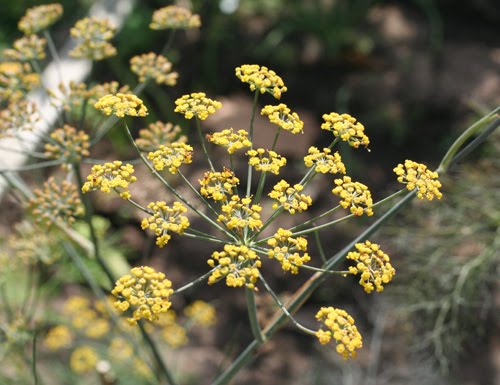
Flowers of bronze fennel.

Succulents.

Dwarf jatropha.

Yellow bells (Tecoma stans) with bumblebee.

Salvia 'Otahal'.

Bud of 'Graham Thomas' rose.

Species canna.

Unknown purple verbena.

Butterfly weed.

'Caldwell Pink' polyantha antique rose.

Purple oxalis.

Floribunda rosa 'Monkey Business'.

Gulf Fritillary on Turk's cap 'Big Momma' bloom.

'Radazz' Knockout rose.

Bulbine.

Pink Knockout rose.

Mexican sunflower (Tithonia).

Buddleia.

'Texas Star' hibiscus, still blooming after all these months!
It's amazing what one can find when one looks really closely at the garden. I may have to try this again.
Thursday, October 21, 2010
The white garden
Most gardeners have probably heard of Sissinghurst, the castle and the gardens in Kent in the United Kingdom. The gardens were planned and established in the 1930s and later by the poet and gardening writer Vita Sackville-West and her husband, diplomat Harold Nicolson. The grounds were arranged into distinct garden rooms with different themes. Perhaps the most popular of these is the White Garden.
Imagine establishing a garden with such a limited palette. All the flowers must be white. The only other color is the green of the foliage. How would you create interest in such a garden and keep it from being boring?
Texture is certainly one answer. Different types of foliage and flowers, delicate and fernlike to large and stiff, different shapes and sizes in plants and even different "shades" of white all can create a feeling of variety and excitement and keep the eye moving to different spots around the garden. Of course, it helps if you are Vita Sackville-West and you REALLY know what you are doing.
But even in a garden that isn't all white, white can be an important accent, a focal point to draw the eye. I started thinking about the whites in my garden and decided to take the camera out and see what I could find.

This loropetalum 'Emerald Snow' seems a bit confused. Its normal bloom time is late winter and spring, but here in the middle of autumn it is putting out a few blossoms. It would definitely fit in a white garden.

As would the little Blackfoot daisies.

'Hot Lips' salvia probably wouldn't be allowed admittance to the white garden. After all, her blooms start out cherry red and slowly turn white. Only at the end of their bloom cycle are they entirely white.

'Bleeding Heart' clerodendrum is just the opposite. The blossoms start out pure white but then slowly open up to reveal the red "bleeding heart". Vita probably wouldn't have permitted it in her white garden.

White vincas might make the cut. I haven't planted vincas in my garden in years, but long ago I did and every year since they have reseeded, sometimes in very unexpected places in the garden.

'Ducher' rose certainly passes muster for a white garden. I added this one to my garden this spring and it has spent all summer and fall in a big pot. Sometime this winter I have to identify a planting bed for it. It has bloomed well even in the pot, but I know it will be much happier in a bed where it can stretch its roots.
Earlier in the year, I would have been able to find a lot more white around the garden - crinums, spider lilies, some daylilies that are creamy white, even a white kalanchoe - but this week my whites are few. However, looking for them gave me pause to think about what it would be like to have a white garden or to have different "rooms" in my garden with different themes.
This is hardly an original thought. I know many accomplished gardeners create garden rooms. It's just a germ of an idea floating around in the empty space between my ears at the moment, but maybe that's the way Vita's White Garden started, too.
Imagine establishing a garden with such a limited palette. All the flowers must be white. The only other color is the green of the foliage. How would you create interest in such a garden and keep it from being boring?
Texture is certainly one answer. Different types of foliage and flowers, delicate and fernlike to large and stiff, different shapes and sizes in plants and even different "shades" of white all can create a feeling of variety and excitement and keep the eye moving to different spots around the garden. Of course, it helps if you are Vita Sackville-West and you REALLY know what you are doing.
But even in a garden that isn't all white, white can be an important accent, a focal point to draw the eye. I started thinking about the whites in my garden and decided to take the camera out and see what I could find.

This loropetalum 'Emerald Snow' seems a bit confused. Its normal bloom time is late winter and spring, but here in the middle of autumn it is putting out a few blossoms. It would definitely fit in a white garden.

As would the little Blackfoot daisies.

'Hot Lips' salvia probably wouldn't be allowed admittance to the white garden. After all, her blooms start out cherry red and slowly turn white. Only at the end of their bloom cycle are they entirely white.

'Bleeding Heart' clerodendrum is just the opposite. The blossoms start out pure white but then slowly open up to reveal the red "bleeding heart". Vita probably wouldn't have permitted it in her white garden.

White vincas might make the cut. I haven't planted vincas in my garden in years, but long ago I did and every year since they have reseeded, sometimes in very unexpected places in the garden.

'Ducher' rose certainly passes muster for a white garden. I added this one to my garden this spring and it has spent all summer and fall in a big pot. Sometime this winter I have to identify a planting bed for it. It has bloomed well even in the pot, but I know it will be much happier in a bed where it can stretch its roots.
Earlier in the year, I would have been able to find a lot more white around the garden - crinums, spider lilies, some daylilies that are creamy white, even a white kalanchoe - but this week my whites are few. However, looking for them gave me pause to think about what it would be like to have a white garden or to have different "rooms" in my garden with different themes.
This is hardly an original thought. I know many accomplished gardeners create garden rooms. It's just a germ of an idea floating around in the empty space between my ears at the moment, but maybe that's the way Vita's White Garden started, too.
Wednesday, October 20, 2010

Tuesday, October 19, 2010
Slooowly, they come
The news at Journey South sort of confirms my own observations and experience of the Monarch migration this fall. Namely, that it has been slow in Texas.
Large numbers of Monarchs were reported farther north and moving our way in August and September, but for the most part the numbers in Texas have been rather sparse. The question is, have the butterflies somehow slipped by without being seen, or are they still loitering out there somewhere and perhaps will be showing up later this month? The people at Journey South characterize last week as "surprisingly quiet."
In my own yard, the pace of the migration actually picked up last week. As regular readers may recall, I had only seen one Monarch in the yard this fall prior to then. But, during last week, two more showed up on different days. Neither of them tarried for very long. They fed for a while on the nectar plants as I watched and then moved on.
So my grand total of sightings in my yard this fall has been three. In other years, I would have had tens or even hundreds by now. I have no doubt that other Monarchs have passed through my yard unseen. Still, since I am out there every day for most of the day, it seems unlikely that any large numbers could have passed by without my seeing them.
Interestingly, as we were coming back from a trip to Bolivar Peninsula last Friday, late in the afternoon, we encountered a few migrating Monarchs after we headed north on SH 249. I counted four on the ten mile (about) stretch between the Beltway and our house. They were flying singly, high above the roadway, and each one was headed west.
The thing is, in order for the Monarchs to get to their wintering grounds in Mexico, they have to pass through Texas. Some pass through what is called the "Central Flyway" and others follow the "Coastal Flyway" and we are squarely in the middle of that. Most of the butterflies from the southeastern part of the country follow the Coastal Flyway, so it may well be that we will see greatly increased numbers of the fliers over the next two to three weeks.
It is unclear how much the Monarchs have been able to rebuild their population since last winter's devastation. Once they have all reached the wintering area, scientists can get a better count and determine how things are going for them.
Meantime, we sit and wait. Our milkweed is all planted and waving enticingly in the breeze. The table is set. Will the guests show up?

A visitor from last October.
Large numbers of Monarchs were reported farther north and moving our way in August and September, but for the most part the numbers in Texas have been rather sparse. The question is, have the butterflies somehow slipped by without being seen, or are they still loitering out there somewhere and perhaps will be showing up later this month? The people at Journey South characterize last week as "surprisingly quiet."
In my own yard, the pace of the migration actually picked up last week. As regular readers may recall, I had only seen one Monarch in the yard this fall prior to then. But, during last week, two more showed up on different days. Neither of them tarried for very long. They fed for a while on the nectar plants as I watched and then moved on.
So my grand total of sightings in my yard this fall has been three. In other years, I would have had tens or even hundreds by now. I have no doubt that other Monarchs have passed through my yard unseen. Still, since I am out there every day for most of the day, it seems unlikely that any large numbers could have passed by without my seeing them.
Interestingly, as we were coming back from a trip to Bolivar Peninsula last Friday, late in the afternoon, we encountered a few migrating Monarchs after we headed north on SH 249. I counted four on the ten mile (about) stretch between the Beltway and our house. They were flying singly, high above the roadway, and each one was headed west.
The thing is, in order for the Monarchs to get to their wintering grounds in Mexico, they have to pass through Texas. Some pass through what is called the "Central Flyway" and others follow the "Coastal Flyway" and we are squarely in the middle of that. Most of the butterflies from the southeastern part of the country follow the Coastal Flyway, so it may well be that we will see greatly increased numbers of the fliers over the next two to three weeks.
It is unclear how much the Monarchs have been able to rebuild their population since last winter's devastation. Once they have all reached the wintering area, scientists can get a better count and determine how things are going for them.
Meantime, we sit and wait. Our milkweed is all planted and waving enticingly in the breeze. The table is set. Will the guests show up?

A visitor from last October.
Saturday, October 16, 2010
A gardener's week - #11
This was the week when autumn indisputably came to my garden. We may still have some summer-like days in the offing, but there's no going back now.
Whenever I was outside this week, I could not help but notice the constant rustle and patter of falling leaves. The oaks, the sycamores, the crape myrtles and apple tree all joined in the race to see which could shed it leaves the fastest.
Around my garden beds, I'm noticing that, all of a sudden, the weeds are not growing quite so fast! I'm almost able to keep up with them - not quite, but almost.
In the veggie garden, all the little seeds that I've planted are germinating and I've got lots of tiny baby plants coming along. I did finally get the parsnip seeds planted this week, but from what another local gardener/blogger tells me, I'll probably have quite a wait before they are up.
I moved a few plants around this week - cast iron plants went to the bed under the red oak; foxtail ferns were settled into the big pot with the Musa acuminata, var. Sumatrana that I got from a fellow blogger at our bloggers' meet-up in the spring; and the hydrangeas moved to the beds by the back porch entry where I can keep a closer eye on their moisture needs.
But mostly what I did again this week was to water my plants. It's been over six weeks now since my garden has had any significant rain and the lack of natural moisture is getting to be a serious problem. I'm actually rather amazed that my garden has held up as well as it has.
Another clue that autumn is really here was the arrival in the garden of two more migrating Monarch butterflies this week. Neither of them tarried for long and I don't know if they left me any souvenirs of their visit. Time will tell.
Meanwhile, though, I had an absolutely gorgeous, pristine, no blemishes Giant Swallowtail in the garden this week. I'm pretty certain that this is the adult version of the caterpillar that was on my lemon tree a couple of weeks ago - the one I almost cut in two!
I wanted to get a picture of this beautiful butterfly and I chased it around with my camera but never was able to get it to light long enough for me to capture it, and then I got distracted by another little butterfly.

This tiny butterfly - it could not have been more than 1 1/2 to 1 3/4 inches wide with its wings spread - was flying around the beet bed that I had just watered and it stopped to sip. I tried to get a picture of it with its wings spread, but I just couldn't manage it. However, as it sits here with the sun shining through its folded wings, you can see that its wings are edged in a darker color. It is black. The butterfly is a yellow-orange and black critter called a Sleepy Orange Sulphur. I always have sulphurs but I don't think I've ever seen one quite like this in the yard before.
Today, I also saw a Queen butterfly feeding on the flame acanthus. Another one of my caterpillars from a few weeks ago, perhaps?
Although watering duties still keep me busy, I'm finding more time to just sit and reflect and enjoy my garden these days while listening to the trickle of water for my little bamboo fountain in the old iron wash pot.

It would look a lot prettier if I could manage to keep the rascally raccoons from periodically uprooting the plants and ripping their leaves. Sigh. It's always something...
But I'm not about to let the rampaging raccoons interfere with my enjoyment of this glorious season. I trust that you are enjoying it, too.
Whenever I was outside this week, I could not help but notice the constant rustle and patter of falling leaves. The oaks, the sycamores, the crape myrtles and apple tree all joined in the race to see which could shed it leaves the fastest.
Around my garden beds, I'm noticing that, all of a sudden, the weeds are not growing quite so fast! I'm almost able to keep up with them - not quite, but almost.
In the veggie garden, all the little seeds that I've planted are germinating and I've got lots of tiny baby plants coming along. I did finally get the parsnip seeds planted this week, but from what another local gardener/blogger tells me, I'll probably have quite a wait before they are up.
I moved a few plants around this week - cast iron plants went to the bed under the red oak; foxtail ferns were settled into the big pot with the Musa acuminata, var. Sumatrana that I got from a fellow blogger at our bloggers' meet-up in the spring; and the hydrangeas moved to the beds by the back porch entry where I can keep a closer eye on their moisture needs.
But mostly what I did again this week was to water my plants. It's been over six weeks now since my garden has had any significant rain and the lack of natural moisture is getting to be a serious problem. I'm actually rather amazed that my garden has held up as well as it has.
Another clue that autumn is really here was the arrival in the garden of two more migrating Monarch butterflies this week. Neither of them tarried for long and I don't know if they left me any souvenirs of their visit. Time will tell.
Meanwhile, though, I had an absolutely gorgeous, pristine, no blemishes Giant Swallowtail in the garden this week. I'm pretty certain that this is the adult version of the caterpillar that was on my lemon tree a couple of weeks ago - the one I almost cut in two!
I wanted to get a picture of this beautiful butterfly and I chased it around with my camera but never was able to get it to light long enough for me to capture it, and then I got distracted by another little butterfly.

This tiny butterfly - it could not have been more than 1 1/2 to 1 3/4 inches wide with its wings spread - was flying around the beet bed that I had just watered and it stopped to sip. I tried to get a picture of it with its wings spread, but I just couldn't manage it. However, as it sits here with the sun shining through its folded wings, you can see that its wings are edged in a darker color. It is black. The butterfly is a yellow-orange and black critter called a Sleepy Orange Sulphur. I always have sulphurs but I don't think I've ever seen one quite like this in the yard before.
Today, I also saw a Queen butterfly feeding on the flame acanthus. Another one of my caterpillars from a few weeks ago, perhaps?
Although watering duties still keep me busy, I'm finding more time to just sit and reflect and enjoy my garden these days while listening to the trickle of water for my little bamboo fountain in the old iron wash pot.

It would look a lot prettier if I could manage to keep the rascally raccoons from periodically uprooting the plants and ripping their leaves. Sigh. It's always something...
But I'm not about to let the rampaging raccoons interfere with my enjoyment of this glorious season. I trust that you are enjoying it, too.
Subscribe to:
Posts (Atom)